

Illegal Dumping Resources
Welcome to the illegal dumping toolbox, a joint effort by the Illegal Dumping Technical Advisory Committee (IDTAC) and CalRecycle. Find information, history, and resources focused on efforts to resolve the various forms of illegal dumping.
Illegal dumping issues are primarily the responsibility of local government (see Additional Resources for Residents for your suggested local contact). Government Involvement with Illegal Dumping section.
CalRecycle mainly assists with illegal disposal sites (by way of Local Enforcement Agencies) and has some funding and resources for litter and illegal dumping cleanup projects. PDF guides:
Illegal Dumping Toolbox
The toolbox is structured around four essential elements that help combat illegal dumping, known as PACE, and other important topics:
Local governments can use the toolbox when establishing or expanding programs to ensure they are comprehensive and effective.
What is Illegal Dumping?
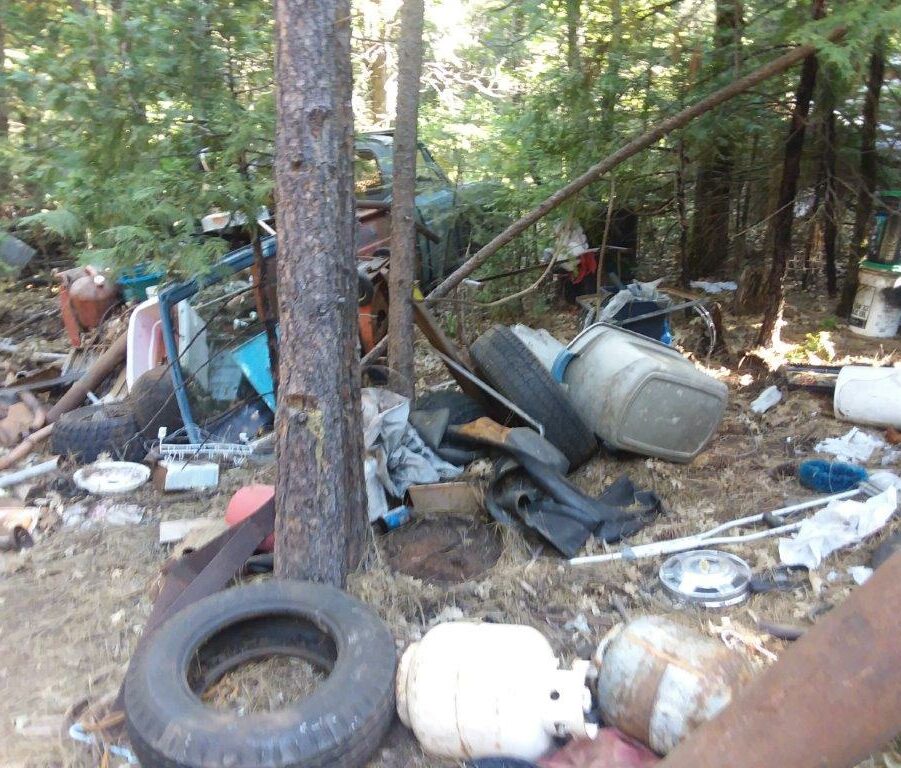
Illegal dumping is the act of disposing of solid waste at a location that is not a permitted solid waste disposal facility and is usually done for economic gain. Illegal dumping poses significant social, environmental, and economic impacts statewide. California’s local government spends tens of millions of dollars annually to remove illegally dumped materials, and private property owners incur significant costs to clean up illegal dumping. Illegal dump sites that are not abated often grow in size and can then become illegal disposal sites.
- Report Illegal Dumping Map
- IDTAC Meetings and Notes
- Homeless Encampment Reference Guide
- Statewide Conference on Illegal Dumping 2024 (Info, Registration)
- Statewide Illegal Dumping Conference Resource Pages 2023, 2022 & 2021
- Illegal Dumping Listserv – Sign up for updates and meeting announcements

Government Involvement with Illegal Dumping
Local government tends to view illegal dumping as a litter/nuisance abatement issue rather than a solid waste issue. Local responses vary greatly statewide in terms of approach and level of activity. Local code enforcement plays a lead role in some communities, while public works departments have primary responsibility in others. Some jurisdictions, such as Alameda County, have conducted studies in cross-sector partnerships to explore scalable and replicable solutions to illegal dumping. Their report offers a close-up view of the problem, its roots, and solutions.
Local and State policing agencies will cite people caught illegally dumping, but those agencies are not usually responsible for cleanup programs. No single State or local agency is given responsibility for a comprehensive program to combat littering and illegal dumping, identified in the Penal Code as being punishable as infractions or misdemeanors. CalRecycle is responsible for investigation, cleanup, and enforcement of illegal solid waste disposal sites and shares this responsibility with local enforcement agencies.
Additional Resources for Residents
During its meetings, the committee recognized the need to develop resources for residents who wish to get involved in reporting and solving illegal dumping. As an example of local resources for residents, Los Angeles County created a web portal for residents to report illegal dumping. Another example shows the City of Redding’s online form to report illegal dumping.
Residents may also wish to use the reporting form available on CalEPA’s website.
CalRecycle offers a Beta-version Report Illegal Dumping (GIS/Geo) Map to find local resources for reporting illegal dumping. Please send map questions, corrections, and ideas to IllegalDumping@calrecycle.ca.gov.
California’s Illegal Dumping History, IDTAC Info
In 2006 the California Integrated Waste Management Board (now CalRecycle) established a high-level State and local illegal dumping enforcement task force to assess the extent of the problem and develop recommendations to enhance the effectiveness of local and regional responses to the problem. The task force recommendations were presented in March 2007 and staff analysis and recommendations on illegal dumping were presented in December 2007. One of the recommendations was to develop a web-based illegal dumping resources toolbox for local government. In December 2010, the task force was changed to a technical advisory committee. The committee has broad membership and representation, and any interested party can participate at meetings.
Questions or concerns about illegal dumping best practices or programs? Reach out directly to an IDTAC member via email, or by joining the independent Google Group to share general anti-dumping information with IDTAC Stakeholders throughout California. The IDTAC group communication platform is hosted outside of CalRecycle’s domain on Google Drive. CalRecycle does not maintain or control the contents of the host site or the linked documents.
For more information contact: Illegal Dumping, IllegalDumping@calrecycle.ca.gov